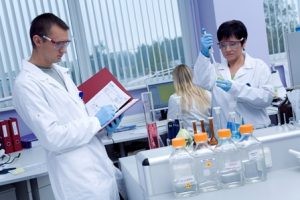
The principle of mass spectrometry detection of acrylamide in water is to directly inject the water sample after filtration through a 0.22um filter membrane, and then enter the tandem mass spectrometer after separation by liquid chromatography, using multiple reaction monitoring (MRM) mode. The peaks were qualitatively analyzed, and the internal standard method was used for quantitative analysis. The detection limit of this method was 0.036ug/L, and the lower limit of determination was 0.15ug/L.
1. Disposable syringe filter: 0.22um, polytetrafluoroethylene (PTFE) material.
2. Disposable syringe: 2.5mL.
3. High-purity water: The water quality should meet the requirements of GB/T33087.
4. Methanol: chromatographically pure.
5. Carrier gas: high-purity nitrogen, purity ≥99.999%.
6. Acrylamide standard solution: 1000mg/L, solvent is methanol, certified reference material.
7. Standard solution of acrylamide isotope (D3-acrylamide): 1000mg/L, solvent is methanol, certified reference material.
8. Standard stock solution of acrylamide: 10.0 mg/L.
Take 1.00 mL of acrylamide standard solution, dilute it with methanol and dilute to 100 mL to prepare 10.0 mg/L acrylamide standard stock solution. Refrigerate below 4°C and keep away from light.
9. D3-acrylamide standard stock solution: 10.0 mg/L.
Take 1.00 mL of LD3-acrylamide standard solution, dilute with methanol and dilute to 100 mL to prepare 10.0 mg/LD3-acrylamide standard stock solution. Refrigerate below 4°C and keep away from light.
10. Acrylamide standard solution: 10.0ug/L.
Take 100uL acrylamide standard stock solution, dilute it with high-purity water and dilute to 100mL to prepare 10.0ug/L acrylamide standard solution.
11. D3-acrylamide standard solution: 10.0ug/L.
Take 100u of LD3-acrylamide standard stock solution, dilute it with high-purity water and dilute to 100mL to prepare 10.0ug/LD3-acrylamide standard solution.
1. Liquid chromatography-tandem mass spectrometer: equipped with electrospray ion source.
2. Chromatographic column: C18 chromatographic column or other chromatographic column with equivalent performance.
3. Sample bottle: 2mL.
4. Volumetric flasks: 100mL and 10mL.
5. Sampling bottle: brown glass bottle with glass stopper.
6. Micro syringe: 1000uL.
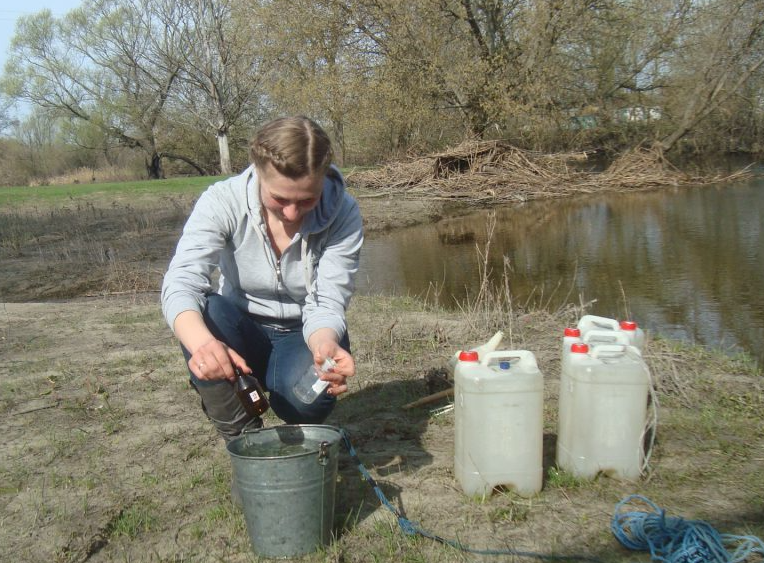
The water samples were refrigerated and stored below 4 °C after collection, and the water samples were filtered and tested within 24 h. If residual chlorine is present in the water sample, add ascorbic acid to remove residual chlorine.
The water sample was filtered through a disposable syringe filter, the water sample was taken into a 10mL volumetric flask, 400uLD3-acrylamide standard solution was added, and the water sample was adjusted to the mark. Placed in a sample vial to be tested. If the concentration of the water sample is high or the matrix is complex, the water sample can be appropriately diluted and then filtered through a disposable syringe filter. Substitute laboratory grade pure water for the sample and prepare a blank sample following the same procedure as the sample preparation.
1. Mobile phase: A phase - methanol, B phase - water, A:B=10:90 (V:V), isocratic elution.
2. Flow rate: 0.3 mL/min.
3. Column temperature: 30°C. 4. Injection volume: 10uL.
1. Ion source: Electrospray ion source, positive ion mode.
2. Ion source temperature: 350 °C.
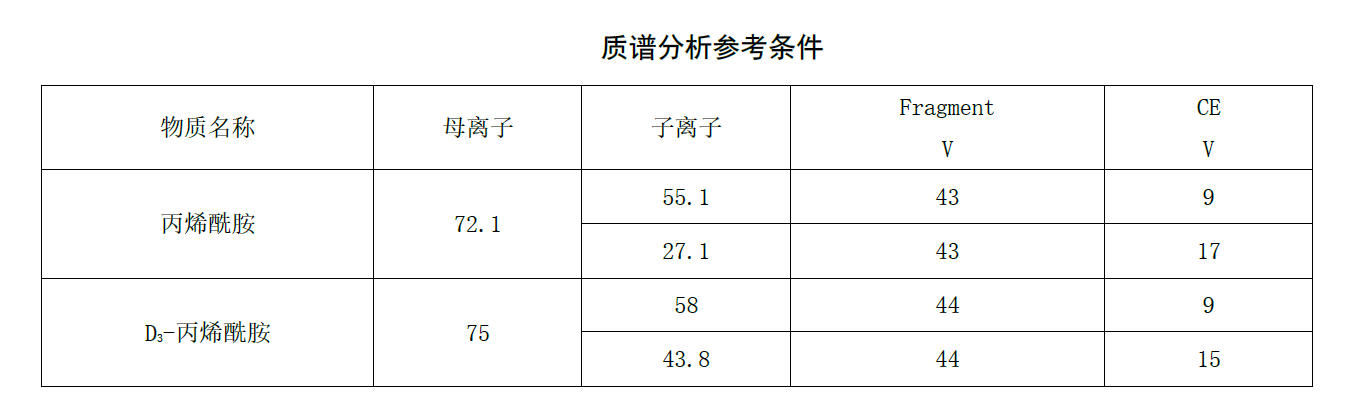
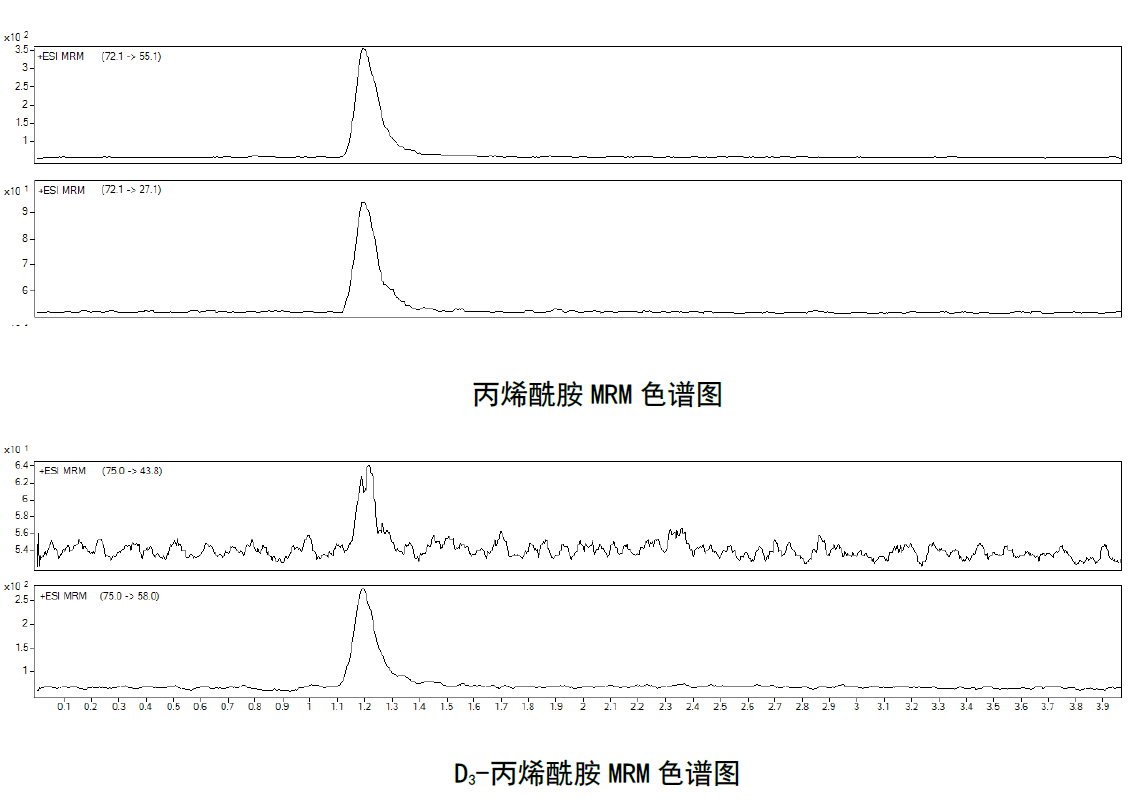
3. Scanning method: MRM, multiple reaction monitoring conditions refer to the following figure
相关推荐